

Booking Guide
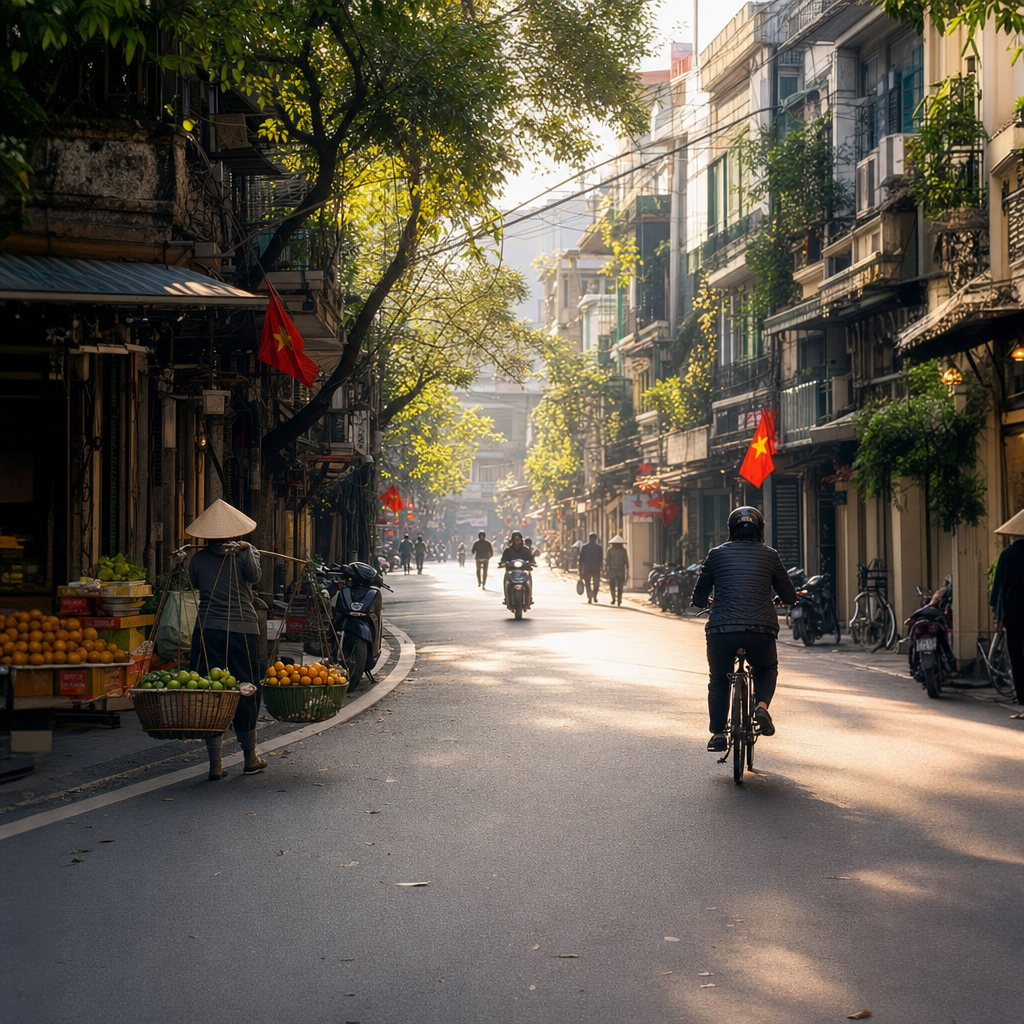
Hanoi has a very special way of holding people back. It might be a morning walk through the Old Quarter, catching the scent of freshly brewed coffee mingling with the wind and the sound of traffic mixed with familiar street calls. Or it might be an unexpected drizzly afternoon that makes the old tiled roofs seem softer. Then when the weather turns cold, Hanoi brings milk flowers, hot dishes, and street corners that make you want to slow down a little. That is why Hanoi is not only beautiful at a fixed moment, but often carries its own unique charm in every season of the year.
Whether you are visiting for the first time or returning to understand the city more deeply, Hanoi always has something new to feel. Each season has a different mood, but all of them share one thing in common: rich identity, a refined pace of life, and a cuisine capable of making any trip memorable.
What makes Hanoi so appealing is not only its scenery, but also the city’s very distinctive structure. Hanoi has four clearly defined seasons, with hot and humid summers, cold and relatively dry winters, while spring and autumn often bring their own transitional moods. Depending on the time of year, you will feel the city differently: spring usually has light drizzle and gentle humidity, summer feels brighter and the streets are livelier, autumn is loved by many visitors for its pleasant weather, while winter brings a quieter mood, ideal for hot dishes and cozy spaces.
Beyond the weather, Hanoi also has the Old Quarter, lakes, and old neighborhoods intertwined with modern life. Here, you might see a sidewalk tea stall right next to a newly opened shop, a street vendor passing an old house marked by time, or a corner that still retains its old look amid the hurried flow of people. This blend is what gives Hanoi many layers of experience, no matter which season you visit.


If you want to understand Hanoi, start with the Old Quarter. This is not just a familiar destination, but also an area that preserves many layers of the city’s urban memory, with craft streets, old architecture, and structures tied to the history of Thang Long - Dong Do - Hanoi. Narrow streets, tube houses, old tiled roofs, small balconies, and connected shopfronts create a space that is both familiar and deep. Walking here, you will see Hanoi revealed not through what is most showy, but through the most everyday details.
Mornings in the Old Quarter often carry a special feeling: traffic is not yet too crowded, shops are beginning to open, the scent of food drifts softly through the streets, and the early light makes everything gentler. A purposeless stroll is enough to let you touch a very real Hanoi — where vendors, office workers, tourists, and local residents all share the same rhythm of life.
Places such as Hoan Kiem Lake, Quan Chuong Gate, and Dong Xuan Market are all worthwhile stops when exploring central Hanoi and the Old Quarter. Still, the most appealing moments are sometimes found in small alleys, old walls, or a quiet café on the second floor. In the Old Quarter, what matters is not going everywhere, but knowing when to stop.
Hanoi rarely forces you to choose a single “best season” to visit. Each season has its own beauty, and it is precisely these differences that create the city’s lasting appeal. If spring brings freshness, summer is full of energy. Autumn is often loved for its pleasant weather and gentle scenery, while winter creates a quieter, warmer Hanoi that is perfect for enjoying steaming dishes.
What is remarkable is that despite changing with the seasons, Hanoi still retains its elegance and cultural depth. The city does not need too much brilliance to make an impression; sometimes just a row of trees changing leaves, an early-opening eatery, a sudden rain shower, or the clink of bowls and plates on a cold morning is enough to create that very Hanoi feeling.
If you want to choose the most pleasant time to explore the capital, autumn is often the most recommended by many travelers. Still, every season in Hanoi has its own character, so the best choice depends on the experience you want to prioritize: sightseeing, walking, enjoying cuisine, or feeling the cool air.
| Season | Weather/landscape characteristics | Suitable experiences | Dishes to try |
|---|---|---|---|
| Spring | Usually light drizzle, gentle humidity, greener trees, and streets that feel softer under the early-year sky. | Walk around the Old Quarter, visit temples and pagodas, and enjoy quiet street corners in the early morning. | Steamed rice rolls, thang long noodle soup, and light, easy-to-eat dishes. |
| Summer | Brighter sunshine, longer days, livelier streets, and many seasonal dishes to cool down with. | Walk around the lake early in the morning, sit in cafés, explore green spaces, and find cool resting spots. | Young green rice, sweet soups, ice cream, lotus tea, and refreshing dishes. |
| Autumn | The weather is often more pleasant, the sky clearer, and Hanoi takes on a gentle beauty, making it a favorite time for walking and photography. | Stroll, photograph the Old Quarter, sit outdoors at a café, go to the market, or visit the lake in the afternoon. | Young rice, green rice cakes, ripe dracontomelon, and light dishes suited to the weather. |
| Winter | Cooler air, occasional northerly winds, a quieter city, and a good fit for warm, cozy experiences. | Have an early dinner, visit long-standing small eateries, take short walks around the city center, and enjoy the night street atmosphere. | Pho, bun cha, cha ca, hotpot, and hot noodle soups. |
Hanoi cuisine has a subtle quality that is hard to mistake. It is not overly elaborate, but each dish has its own balance of flavor, aroma, and way of enjoying it. Pho is the first dish many people think of and is also a very familiar breakfast choice in Hanoi. Looking deeper, you will also find bun cha, cha ca, bun thang, steamed rice rolls, sticky rice, spring rolls, and many snacks tied to each season.
The interesting thing is that Hanoi’s food often changes with the weather. Cold seasons suit hot dishes, broths, or more fragrant flavors. Hot seasons lead people to seek lighter, cooler dishes, or seasonal foods such as young rice, sweet soups, and dracontomelon. Because of this, Hanoi cuisine is not only about “what to eat,” but also about “when to eat” and “where to eat” in order to feel the city’s true spirit.
A bowl of pho in the morning, a plate of bun cha at lunchtime, a portion of cha ca on a chilly evening, or a quick packet of young rice bought on the way home can all become deeply Hanoi memories. These dishes are memorable not only because of their taste, but because they appear at the right time, in the right season, and in step with the rhythm of the city.
Hanoi becomes unforgettable when you experience it not only with your taste buds, but also through the weather, through memory, and through the rhythm of life unfolding around you.
Hanoi is attractive not only because it has many places to visit, but because it preserves its own very distinct rhythms of life. Early morning brings street calls, traffic sounds, and shop doors opening. Midday carries a faster pace of work, but not too much noise. In the afternoon, people walk around the lake, sit at sidewalk tea stalls, or stop by a small shop to rest. At night, the city takes on another look: lit-up streets, quieter roads, and conversations that continue long after dinner.
What makes Hanoi fascinating is that it is both classic and modern, both hurried and leisurely. There are moments when the city feels as if it is moving very fast, but there are also times when standing still for just a moment is enough to feel its gentleness. This contrast is what shapes Hanoi’s identity — a city that does not need to be too noisy to be remembered.
Autumn is often favored by many people because the weather is cooler and more comfortable, making it easier to walk and explore the city center. If you enjoy a gentle atmosphere and want to admire the Old Quarter, this is a highly recommended time. Still, every season in Hanoi has its own charm, so you can choose based on the experience you want to prioritize.
If you want to take it slow and feel the rhythm of life clearly, you should spend at least 2 to 3 days so you have time to wander the Old Quarter, eat through different meals, and visit cultural spots such as Hoan Kiem Lake, Quan Chuong Gate, or Dong Xuan Market. If you only have one day, prioritize the central area and choose an itinerary centered on walking around the Old Quarter to save travel time.
The Old Quarter, Hoan Kiem Lake, and the central area are reasonable choices for a first trip because they are convenient to get around, easy to access for food, and full of experiences that are distinctly Hanoi. From here, you can combine walking, stopping at cafés, having lunch with bun cha or pho, and then continuing to explore nearby streets.
Absolutely. Early morning is when you can feel the city’s everyday rhythm most clearly, from street calls and opening eateries to the gentle atmosphere around the lake and the Old Quarter. It is also a good time for breakfast pho, coffee, and walking around Hoan Kiem Lake before the streets get busier.
Very much so. Hanoi is an ideal destination for those who enjoy observing, walking, savoring food, and feeling the subtle changes of space by season and by time of day. If you love intimate experiences such as long-standing eateries, small alleys, craft streets, and quiet pauses in the center, Hanoi is a place worth spending time in.
No matter which season you come to Hanoi, the city always has memorable things waiting to be discovered. It might be a fall morning with a cup of coffee, a summer noon with a refreshing meal, or a winter evening among cool streets and a bowl of hot pho. Every trip to Hanoi can be different, but the feeling that remains is often very similar: familiar, refined, and unforgettable.
If you are planning a journey to the capital, choose a time that suits you and let Hanoi tell its own story. Just come, slow down a little, and open your heart to the city, and you will see Hanoi is beautiful in its own way — and always has something new to explore.
Was this information helpful?
Your feedback helps us improve our content