

Booking Guide
On a first trip to Hong Kong, many people are immediately drawn in by the glowing skyline along the harbor. But just a short distance away from the city center, you’ll find a very different Hong Kong: old streets tucked between skyscrapers, the smell of hot food drifting from small roadside stalls, vendors calling out in night markets, and a fast-paced rhythm that still preserves its own unique habits. It is this contrast that gives the city its unmistakable appeal.
For travelers who love exploration, Hong Kong is not just a place to sightsee. It is a city where you can walk all day and still feel a sense of discovery: visit an old neighborhood in the morning, explore a temple or heritage district in the afternoon, then stroll through a night market and eat late like a local. Whether you’re here for a short stay or have more time, the city has a way of holding onto visitors through its cultural depth and its distinctive blend of East and West.
What sets Hong Kong apart is not only its modern appearance, but also the layers of culture built up over many eras. Here, colonial influences, East Asian beliefs, international commerce, and urban life all coexist in a very small but highly energetic space. You can start the morning at a casual eatery, visit a temple at midday, and end the evening in a brightly lit district filled with dense signage and an endless flow of people.
This multilayered character makes Hong Kong ideal for those who like to observe and experience a city through many senses. Without going far, simply changing neighborhoods is enough to encounter a different atmosphere: some places are quiet and historic; others are lively and commercial; some feel deeply local, while others are strongly international. That is why many travelers see Hong Kong as a city worth discovering again and again without ever fully exhausting it.
To feel Hong Kong more authentically, start by slowing down. Areas such as Central, Sheung Wan, Tai Kwun, Yau Ma Tei, and the surroundings of Temple Street are not just map stops, but places that preserve the city’s rhythm and memory. There you’ll find long-standing small shops, old building facades, tightly packed signboards, temples tucked modestly into the street, and tea shops or eateries that may not look fancy but always have regular customers.
Walking through these neighborhoods, the appeal is not in checking off as many spots as possible, but in the feeling of observing a city that is alive. It might be a small market in the morning, a temple filled with incense smoke, or a row of buildings marked by colonial architecture. Every corner tells a story about how Hong Kong was formed and developed, from its local traditions to its modern urban life today.
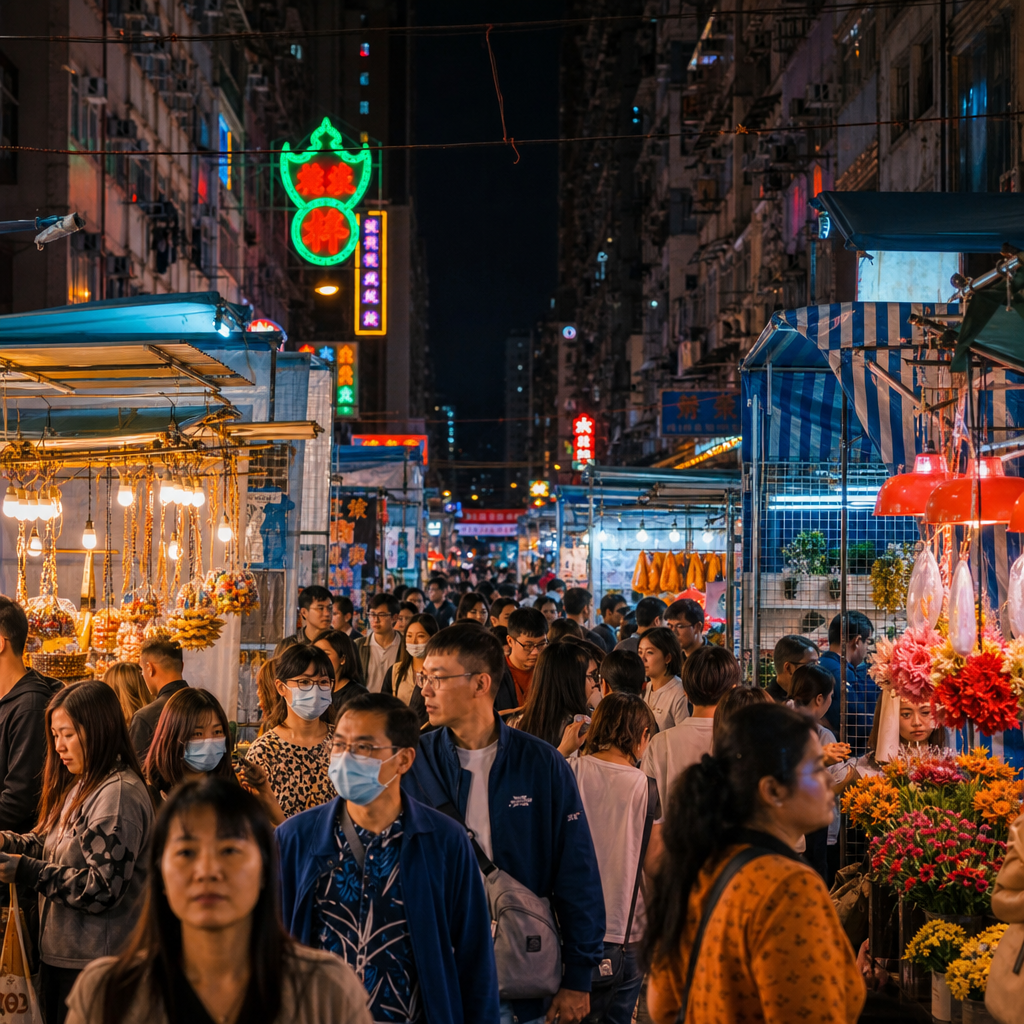
Night markets are among the clearest reflections of Hong Kong’s personality: fast, crowded, colorful, yet still very orderly. When the lights come on, the whole neighborhood seems to shift into another rhythm. Calling out dishes, traffic sounds, the smell of grilled food, the glow from stalls, and short conversations between sellers and buyers create a vivid scene that is hard to mistake for anywhere else.
Going to a night market is not only about snacks or souvenirs. It is when you can see Hong Kong at its most intimate and everyday. If you want to enjoy it fully, go with a relaxed mindset: don’t try to pack too many stops into one evening, but instead slow down, taste a few things, watch the crowds, and let the city guide you. Night markets are often at their best when you are not in a hurry.

Hong Kong cuisine is an important part of its East-West cultural blend. Here, you’ll find dishes rooted in East Asian traditions, but with service style, setting, and dining habits that are very urban and practical. A morning can begin with dim sum, midday with a steaming bowl of noodles, afternoon with Hong Kong-style milk tea, and evening with street food or a freshly baked egg tart.
If it’s your first visit, there’s no need for an overly complicated menu. Start with familiar-sounding dishes that still have a distinct local identity. What’s memorable is not only the flavor, but also how people in Hong Kong eat: efficient and straightforward, yet still very much about enjoyment. In particular, cha chaan teng-style eateries are well worth trying if you want to understand the city’s everyday rhythm.
| Dish | Flavor/characteristics | Best time to try | Experience suggestion |
|---|---|---|---|
| Dim sum | Many small dishes, varied fillings and preparations, great for sharing | Breakfast or lunch | Choose a local restaurant to experience the dining culture of sitting for a while and ordering many dishes |
| Wonton noodles | Clear broth, springy noodles, soft and fragrant wontons | Lunch or a light dinner | Try it at a casual eatery to appreciate the refinement of a familiar dish |
| Char siu | Richly seasoned roasted pork, slightly sweet, tender and aromatic | Lunch or dinner | Have it with rice or noodles to better feel the local culinary style |
| Hong Kong milk tea | Bold, moderately creamy, with a clear tea flavor and easy to drink | Midday or after meals | Drink it at a cha chaan teng to experience the city’s true “coffee-tea-fast food” spirit |
| Egg tart | Flaky crust, soft filling, fragrant with egg and butter | Afternoon snack or evening treat | Buy it fresh from the oven to enjoy the best flavor |
| Street food | Diverse, convenient to eat, reflecting market and neighborhood life | Evening, especially at night markets | Try small portions so you can leave room for more experiences |
Hong Kong is special because its East-West fusion is not limited to architecture or cuisine; it is woven into the way the city functions. You may see a Western-style building next to an East Asian temple, a local restaurant serving food at a very quick pace but with a menu shaped by multiple cultural influences, or a modern tram line carrying you past neighborhoods that still preserve traditional routines.
This harmony makes Hong Kong feel both familiar and unfamiliar. The city is modern enough to be convenient for visitors, yet deep enough that those who love exploring never get bored. Perhaps that is why many people come once and then want to return, not just to shop or sightsee, but to keep learning about a city that is always moving without losing its identity.
If you want to experience Hong Kong properly, don’t just look at it from above. Walk under the old awnings, eat a very ordinary meal, visit a night market when the city lights come on, and let the small details lead you to the true character of this place.
Day 1: Start in an old neighborhood, visit a temple or heritage space, then have lunch at a local restaurant. Spend the afternoon walking around central districts with layered architecture and a blend of urban rhythms. In the evening, go to a night market and finish the day with a light meal or a local dessert.
Day 2: In the morning, try a Hong Kong-style breakfast at a cha chaan teng, then take the ferry or head up to a high viewpoint for a panoramic look at the city. Spend the afternoon in a market, a shopping street, or a quieter cultural corner. Return to a food district at night to try more street food and feel the city’s nighttime rhythm.
If you have 3 days: Add a day to go deeper into smaller neighborhoods, cultural spots, and eateries loved by locals. A longer trip doesn’t need to be denser; it should be slower so you have time to observe, choose dishes, and enjoy the city’s atmosphere.
If you want to experience old streets, night markets, food, and urban life, you should spend at least 2–3 days. If you want to travel more slowly and explore more deeply, stay longer so you don’t have to rush around.
Depending on your itinerary, you can choose a central area for easier access to attractions, or stay near a district with many eateries if you want to prioritize food and night markets. The most important thing is that your accommodation is well connected to public transportation.
Evening is when night markets are at their liveliest, as stalls are lit up and the atmosphere becomes especially vibrant. If you want a more relaxed visit, arrive a little earlier before the peak hours.
Quite easy. There are many familiar dishes, clear flavors, and simple choices for any meal. If you’re not used to it yet, you can start with dim sum, wonton noodles, egg tarts, or Hong Kong milk tea.
Hong Kong has a public transportation system that is very convenient for travelers. Combining the tram, ferry, and walking is an efficient way to move between districts and also a great way to experience the city.
Yes. Hong Kong is well suited to both short and long trips because its experiences are fairly concentrated, easy to organize, and flexible enough to adjust based on your interests.
Hong Kong has a unique way of making people want to return: from old streets and illuminated night markets to simple yet memorable meals. If you’re looking for an international destination that is both dynamic and culturally rich, this is a city well worth adding to your next travel plan. And sometimes, the most memorable journey begins with choosing the right moment to set out.
Was this information helpful?
Your feedback helps us improve our content