

Booking Guide
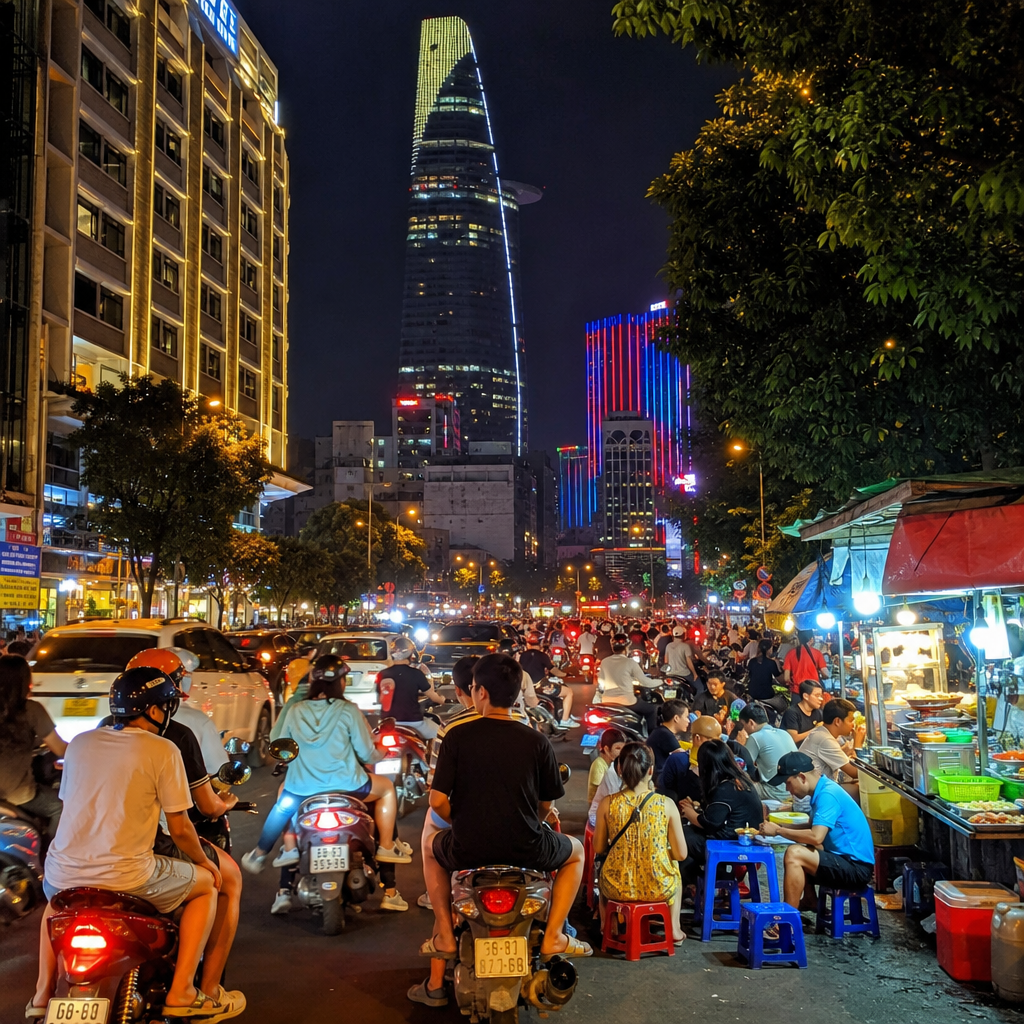
Ho Chi Minh City has a rhythm all its own: by day, it buzzes with people going to work, school, and shopping; when the lights come on, many central streets, eateries, cafés, and public spaces stay lit, creating a lively urban scene. For visitors, this is a place where you can experience the city step by step: walking, observing, enjoying local dishes, and watching its rhythm change hour by hour.
If you are looking for a journey that combines cuisine, history and culture, and urban experiences, Ho Chi Minh City is a destination well worth considering in your travel plans. From iconic landmarks in the center to markets, food streets, and familiar local hangouts, the city lets you explore at your own pace. Official tourism information about Ho Chi Minh City can also be found on the city’s tourism portal so you can arrange a suitable itinerary in advance.
Ho Chi Minh City’s appeal comes from the natural blend of modernity and tradition. On one side are busy streets, shopping centers, cafés, and a fast pace of life; on the other are traditional markets, historic architectural works, old streets, and the everyday habits of city residents.
Visitors often sense this clearly right in the downtown area. Nguyen Hue Walking Street, the Independence Palace (Reunification Palace), Notre-Dame Cathedral, and the Central Post Office are familiar landmarks when talking about exploring central Ho Chi Minh City. According to information from Ho Chi Minh City tourism and the official websites of these destinations, they are all prominent stops in District 1, convenient for combining walking, photography, coffee breaks, and learning more about the city’s history and architecture.
The city also suits many different styles of exploration: a trip focused on food, a journey to learn about culture and history, or a weekend spent strolling the streets and observing urban life. The diversity of attractions and services makes it easy for visitors to design an itinerary that fits their needs.

When talking about Ho Chi Minh City, it is hard to overlook street food. It is an important part of the urban rhythm, present at many times of day, from a quick breakfast on the sidewalk to late dinners and snacks after work. Many markets and food streets in the city are known for their wide variety of dishes, making it easy for visitors to find an experience that suits their taste.
What is interesting is that food in Ho Chi Minh City is often approachable but never monotonous. You can start with a hot, crispy banh mi, then move on to flavorful broken rice, light yet satisfying hủ tiếu, or a cool bowl of chè after dinner. Each dish reflects the city’s flexible eating habits: fast, convenient, practical, yet still focused on flavor.
Banh mi: crispy crust, varied fillings, and easy to eat on the go; suitable for breakfast or an afternoon snack.
Broken rice (cơm tấm): a familiar Saigon dish, often richly flavored, filling, and suitable for lunch or dinner.
Hủ tiếu: can be enjoyed early in the morning or in the evening; the broth and noodles create a light but satisfying dish.
Phá lấu: a rich, savory dish that many people like to try in the afternoon or evening.
Fresh spring rolls (gỏi cuốn): fresh, light, and easy to eat; perfect when you want a change from richer foods.
Street cakes and snacks: from rice paper salad mixes to many other casual bites, great for exploring while walking the streets at night.
Chè: a familiar dessert after a meal, especially when you want to end the evening with something sweet and cool.
Iced milk coffee: a drink closely tied to Saigon’s daily life, enjoyable in the morning, at noon, or late afternoon.
Ho Chi Minh City street food is most appealing when you slow down a little: watch the shops, hear the orders being called, smell the food steaming away, and let one surprise dish lead you to the next.
Prioritize busy eateries with a steady flow of service; this is often an easy sign that the food is popular.
Carry some small cash so ordering at small shops or street stalls is more convenient.
If you want to visit many food spots in one evening, choose areas with concentrated restaurants and stalls to save travel time.
Go slowly, eat small portions each time, but try many dishes to better appreciate the diversity of local cuisine.
Observe how a shop is arranged, served, and kept clean to choose a place that suits your eating habits.
If you are out late at night, plan your route back to your accommodation in advance so your exploration is both complete and comfortable.
By day, Ho Chi Minh City appears with its characteristic hustle and bustle. Early morning is when the city wakes up with cafés, banh mi carts, commuters, and streets that gradually get busier. By midday, life remains flexible, with everyone finding their own little break in the middle of the day.
As evening falls, the city’s urban spirit becomes even clearer. Rush hour brings a stream of vehicles, eateries start filling up, and the street atmosphere grows livelier. Nighttime is when many people choose to stroll, sit at cafés, enjoy late meals, or simply walk around to feel the city continuing to run in its own rhythm.
It is in these moments that visitors can truly feel Ho Chi Minh City’s closeness: a fast pace but not overly distant, crowded yet with many pauses for observation and experience. If you want to immerse yourself in this rhythm, you do not necessarily need to visit many places. Sometimes a short walk, a café overlooking the street, or a trip using a means of transport that fits your plan is enough to see the city very clearly.

Ho Chi Minh City is not only a city of food and urban rhythm. It is also a place where visitors can encounter many layers of culture in a single trip. Historic architecture, traditional markets, museums, downtown districts, and experiences of urban life all contribute to a journey with many shades.
For those who love history and architecture, the downtown area is a great place to walk, observe, and stop at timeworn landmarks. The Independence Palace (Reunification Palace) is one of Ho Chi Minh City’s iconic sites and is recognized as a Special National Relic on the destination’s official website. For those who enjoy a local atmosphere, traditional markets are interesting places to see how the city functions in everyday life. For those who like modern experiences, cafés, lively streets, or exploration by private vehicle or ride-hailing services also offer a different perspective on the city.
What is valuable about Ho Chi Minh City is that cultural experiences are not separate from daily life. Culture appears in the way people order food, the way they talk, the way a street changes pace from hour to hour, and the way the city balances the past and the present.
| Traveler type | Suitable experience | Why try it |
|---|---|---|
| Food lovers | Explore streets with many eateries, try street food in the evening | Helps you clearly feel the diversity and rhythm of the city |
| History enthusiasts | Visit the Independence Palace (Reunification Palace), Notre-Dame Cathedral, the Central Post Office, and related exhibition spaces | Shows the memory and cultural depth of a major city |
| Those who enjoy strolling | Walk in the downtown area, sit at cafés, stop by places with many daytime activities | Ho Chi Minh City has many spaces suitable for observing city life |
| Families | Walk in the city center, visit markets, choose friendly eateries and easy-to-reach stops | A gentle, flexible itinerary suitable for many ages |
| Photography lovers | Night-lit streets, cafés, mixed old-and-new architecture, nighttime traffic scenes | The city offers many contrasting and distinctive frames |
If you only have one day, you can still get a fairly clear sense of Ho Chi Minh City with a compact and flexible itinerary. In the morning, start in the city center to walk, admire the architecture, and stop by a café or a familiar breakfast spot. At noon, choose a local dish to recharge and rest before continuing your exploration.
Afternoon is a good time to visit a cultural site, museum, or public space with lots of foot traffic. If you prefer a gentler pace, a café overlooking the street is enough to let you observe the city from a very different angle. When night falls, spend time on street food: a busy eatery, a few snacks, a cup of coffee or a dessert of chè is enough to end the day with a fulfilling experience.
If you have two days, you can divide the experience into one day focused on culture and the city center, and another day dedicated to food and strolling. This makes the trip feel lighter, not overwhelming, yet still enough to touch many sides of the city.
Ho Chi Minh City can be visited at many times of the year. If you want to combine walking, outdoor sightseeing, and moving between downtown attractions, check the weather forecast before your trip to better arrange your itinerary.
Central areas are usually convenient for combining walking, dining, and visiting cultural sites. If you prefer a livelier atmosphere, you can choose streets with many eateries, cafés, and late-opening services.
Getting around Ho Chi Minh City is quite flexible, with many options such as taxis, ride-hailing services, public transport, or walking in suitable areas. For short trips, it is best to combine walking with ride-hailing to save time.
If your goal is to explore the city in a short amount of time, staying near the center is often very convenient. You can walk more easily, dine more easily, and visit attractions without spending too much time traveling.
Nighttime is when many visitors choose to experience Ho Chi Minh City because the city still has plenty of activities and services. To make the trip more comfortable, you should choose crowded areas, keep your route clear, and prioritize familiar, easy-to-reach stops.
Ho Chi Minh City is the kind of place where the more you explore, the more things you remember: a delicious sidewalk meal, a dazzling night of lights, an old street corner marked by time, or a friendly rhythm of life that always welcomes visitors. If you are planning an upcoming trip, make sure your itinerary leaves enough room both to explore and to enjoy.
When you are ready for your trip to this dynamic city, planning ahead will help make the journey more complete. That way, you can spend more time on the memorable experiences Ho Chi Minh City has to offer — where every evening, every street, and every dish can become a memory of its own.
Was this information helpful?
Your feedback helps us improve our content